What if the tooth you're worried about losing is actually the primary obstacle standing between you and a pain-free life? It's a common misconception that a broken tooth extraction represents a failure in dental care. In reality, removing a tooth that's fractured or severely decayed is often a strategic reset that protects your jawbone and overall health from infection. We understand that when you feel a sharp edge or a sudden jolt from an exposed nerve, it's natural to feel a rush of anxiety about needles, surgery, or how a gap might change your smile.
We agree that these concerns are valid, and you shouldn't have to navigate them alone. This guide is here to provide the clarity you need, explaining why an extraction might be the healthiest choice and how we prioritize your comfort throughout the process. You'll learn about the specialized steps we take to ensure a gentle experience and how we can eventually restore your smile's function with a custom bridge or crown. Our goal is to empower you with information so you can move forward with confidence, knowing you're treated with the same care we'd give our own family members.
Key Takeaways
- Understand why a broken tooth extraction requires a specialized surgical approach to safely remove fragments that are no longer visible above the gumline.
- Discover how we evaluate your tooth's structural integrity to determine if it can be saved or if an extraction is the most reliable path for your long-term health.
- Learn about the precise steps we take, including digital imaging and localized numbing, to prioritize your comfort and peace of mind during the procedure.
- Gain clear instructions for the first 24 hours of recovery to ensure a smooth healing process and effectively prevent complications like dry socket.
- Explore the vital role of restorative options, such as dental bridges, in maintaining your smile’s alignment and protecting your jawbone after a tooth is removed.
Understanding Broken Tooth Extraction: Why It Differs from Simple Removal
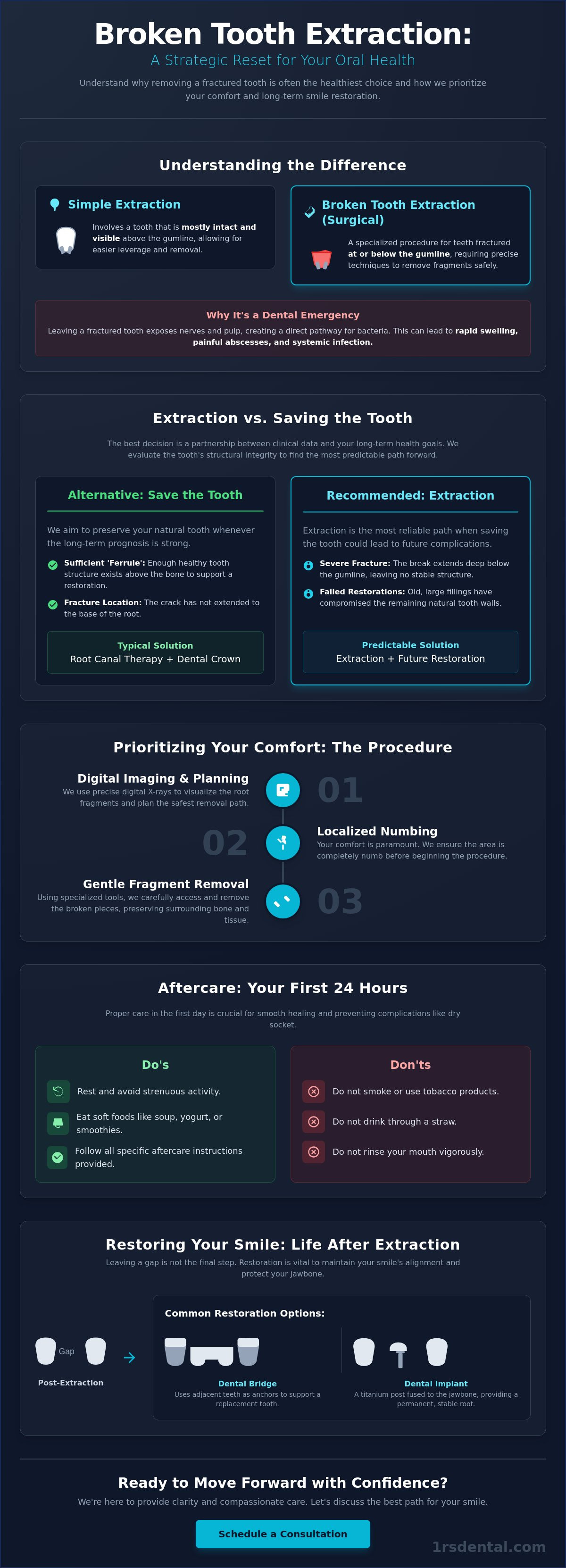
When a tooth breaks, it often feels like a sudden crisis, but it's helpful to understand exactly what is happening beneath the surface. A standard Dental extraction usually involves a tooth that is mostly intact, allowing us to use the visible crown for leverage. A broken tooth extraction, however, is a more specialized surgical procedure. This approach is necessary when a fracture extends deep below the enamel or even under the gumline. Because there isn't enough stable tooth structure to grasp, we use precise, gentle techniques to carefully access and remove the remaining fragments while preserving the surrounding bone and tissue.
Choosing to address a broken tooth promptly is one of the best decisions you can make for your long-term health. While it's tempting to wait if the sharp pain temporarily subsides, leaving a fractured root in the socket carries significant risks. Bacteria can easily enter the open tooth, leading to a painful abscess or even a systemic infection that affects your overall well-being. Additionally, a neglected root can lead to jawbone loss over time, making future restorations more difficult. We want you to know that modern dental care focuses entirely on your comfort. We use localized numbing and refined methods to ensure the process is as smooth and stress-free as possible.
Common Causes of Severe Tooth Fractures
Many patients wonder how their tooth reached this point. Often, it's the result of untreated deep cavities that have quietly weakened the tooth's internal structure over several years. Physical trauma is another major factor; a sudden impact during sports or accidentally biting down on a hard object like a peach pit can cause an immediate split. We also frequently see the "failed filling" cycle. This happens when an old, large restoration eventually puts too much stress on the remaining natural tooth walls, causing them to fracture under the pressure of everyday chewing.
Why a Broken Tooth is a Dental Emergency
A broken tooth is often considered an emergency because it leaves the dental pulp and sensitive nerves exposed to the environment. This exposure creates a direct pathway for bacteria to cause rapid-onset swelling and localized infection. Waiting for the pain to stop is a risky strategy. Usually, if the pain disappears on its own, it means the nerve has died, but the infection is still spreading through the root system. Addressing a broken tooth extraction early prevents these complications from becoming more expensive and complex to treat later on.
Extraction vs. Saving the Tooth: Making the Best Decision for Your Smile
Choosing between saving a tooth and opting for an extraction is a significant crossroad in your oral health journey. Dr. Magaly Velasquez views this decision as a collaborative partnership, where clinical data meets your personal health goals. We look closely at the "ferrule" of the tooth, which is the amount of healthy structure remaining above the bone line. If there is enough sound enamel and dentin to support a restoration, our first instinct is usually to preserve your natural tooth. There are many valid reasons for tooth extraction, but we only recommend it when the long-term prognosis for saving the tooth is poor.
Longevity plays a major role in this analysis. While we value natural teeth, a "heroic" effort to save a severely compromised tooth might lead to a cycle of repeated repairs and discomfort. In cases where a broken tooth extraction is the most predictable path, it allows us to clear away infection and create a stable foundation for future solutions like a dental bridge. We want you to feel empowered during this process. We'll show you your digital X-rays and explain the structural integrity of your tooth so you can make a choice that aligns with your lifestyle and long-term health.
When Root Canal Therapy is an Alternative
If the fracture hasn't reached the root's base and enough healthy structure remains, we can often avoid an extraction. In these scenarios, root canal therapy allows us to remove the damaged pulp and seal the canal, effectively saving the natural root in its socket. To restore full function, a custom dental crown is then placed over the tooth. This provides a protective "cap" that reinforces the cracked structure and prevents further splitting during daily chewing.
When Extraction is the Healthier Path
Sometimes, removing the tooth is the most compassionate and medically sound choice. This is particularly true for vertical root fractures that extend below the gumline, as these cannot be successfully sealed or repaired. If you are dealing with severe periodontal disease where the supporting bone is already compromised, a broken tooth extraction may be necessary to stop the spread of infection to your healthy neighboring teeth. If you are unsure which path is right for your situation, we invite you to schedule a gentle consultation to explore your options together.
The Specialized Procedure for Teeth Broken at the Gumline
When a tooth breaks at the gumline, it requires a different level of clinical precision than a standard removal. Because there is no longer a visible crown to grasp, we approach the process as a methodical, step-by-step journey to restore your health. The process begins with high-resolution digital X-rays. These images allow us to map the exact orientation of the roots and the depth of the fracture, ensuring there are no surprises during the procedure. Once we have a clear map, we apply localized numbing to the area. You'll feel a slight pressure during the broken tooth extraction, but the localized anesthetic ensures you don't experience sharp pain.
A critical part of this specialized tooth extraction procedure is often sectioning the tooth. If the root is firmly anchored or fractured into multiple pieces, we gently divide it into smaller sections. This technique allows us to remove each fragment individually without putting unnecessary stress on the surrounding jawbone. After the fragments are removed, we perform a thorough cleaning of the socket to clear away any lingering debris or infected tissue. Finally, we place sterile gauze over the site and provide you with clear, simple instructions to help your body begin the natural clotting process immediately.
Technology and Comfort at U-First Dental Care
We've designed our practice to feel like a stable, reliable home for our patients in Rancho Cucamonga and Ontario. Our focus on "atraumatic extraction" means we use specialized tools and gentle local anesthetics to preserve as much of your natural bone as possible. This careful approach isn't just about comfort; it's about making sure your jaw remains healthy for future restorative options. You aren't just another appointment to us. We treat you with the same patience and thoroughness we'd offer our own family members, ensuring you feel heard and respected from the moment you sit in the chair.
Surgical vs. Simple Extractions
It's helpful to understand why a broken tooth extraction is usually classified as a surgical procedure. A "simple" extraction is reserved for teeth that are fully visible and can be moved with basic leverage. When a tooth is broken at the gumline, it's often considered surgical because we may need to make a small incision in the gum tissue to reach the fragments. While the word "surgical" might sound intimidating, it simply means we're taking extra care to be precise. You might notice a slightly longer recovery time compared to a simple pull, but the outcome is a cleaner, healthier site that heals more predictably.
Healing and Aftercare: Your Guide to a Smooth Recovery
Your body's ability to heal is truly remarkable, and our role is to support that natural process with clear, gentle guidance. Following a broken tooth extraction, the most critical window for recovery is the first 24 hours. During this time, your primary goal is to protect the blood clot that forms in the empty socket. Think of this clot as a natural bandage; it protects the underlying bone and nerve endings while new tissue begins to grow. If this clot is disturbed, it can lead to a painful condition known as dry socket, which slows down the entire healing journey.
Managing your comfort is a top priority for our team. Most patients find that over-the-counter pain relievers are highly effective for managing the initial soreness. We'll provide specific recommendations based on your health history. Along with medication, your diet plays a vital role in a smooth recovery. For the first few days, focus on soft, nutrient-dense foods like yogurt, mashed potatoes, and lukewarm soups. It's best to avoid "danger foods" such as small seeds, crunchy nuts, or intense spices, as these can easily become trapped in the surgical site and cause irritation or infection.
Maintaining oral hygiene is still important, but it requires a delicate touch. You should continue to brush your other teeth, but be very careful to avoid the extraction area for the first day. After 24 hours, you can begin gentle saltwater rinses to keep the site clean. Avoid vigorous swishing or spitting, as the pressure can dislodge the healing clot. If you have any concerns about how your site is looking or feeling, please contact our Rancho Cucamonga office so we can ensure your recovery is staying on the right track.
Preventing Dry Socket and Complications
To keep the healing process moving forward, you must avoid using straws, smoking, or any form of vigorous spitting for at least 72 hours. These actions create suction in the mouth that can pull the blood clot right out of the socket. While some minor swelling and a bit of pink-tinged saliva are normal, keep an eye out for warning signs. If you experience a high fever, a persistent foul taste, or pain that suddenly worsens after the third day, these could be signs of a complication that requires our attention.
The Timeline of Healing
- Day 1-3: This is the peak period for swelling. Using a cold compress on the outside of your cheek can help keep you comfortable.
- Day 7-10: You'll notice the gum tissue beginning to close over the site. If we used sutures, this is typically when they are removed or begin to dissolve.
- Week 3-6: While the surface looks healed, the bone is now working hard to fill in the socket. This stage is crucial for creating a stable foundation for your future restoration.
Restoring Your Smile: Life After a Broken Tooth Extraction
Once the initial healing from your broken tooth extraction is complete, it's time to look toward the future of your smile. While the immediate relief from pain is a significant milestone, leaving a gap in your dental arch can lead to long-term complications. Teeth rely on each other for stability and alignment. When a tooth is removed, the neighboring teeth often begin to tilt or shift into the empty space. This movement can change the way your upper and lower teeth meet, potentially leading to jaw discomfort and making it more difficult to keep your remaining teeth clean.
Your jawbone also requires constant stimulation from tooth roots to maintain its volume and density. When a root is no longer present, the bone in that specific area can begin to shrink or resorb. This process happens gradually, but it can eventually weaken the support for adjacent teeth and even subtly change your facial structure. We believe in a proactive approach to prevent these issues. By planning for a replacement early, we can protect your bone health and ensure your smile remains functional and beautiful for years to come.
Modern restorative dentistry offers excellent ways to regain your confidence. For many, dental bridges provide a fixed and highly reliable solution that fills the gap without the need for removable appliances. For patients seeking the gold standard in tooth replacement, dental implants are an ideal choice because they replace the tooth root itself, providing the necessary stimulation to keep your jawbone strong. We'll walk you through each option, ensuring you have the information needed to choose the path that best fits your lifestyle.
Dental Bridges: A Time-Tested Solution
A dental bridge is a sophisticated restoration that uses the healthy teeth on either side of the gap as anchors. These neighboring teeth are fitted with crowns that support a custom-made replacement tooth in the center. We use high-quality, custom-shaded porcelain to ensure your bridge blends perfectly with your natural enamel. This is a popular option for our patients in the Rancho Cucamonga area who want a durable, aesthetic result that restores their ability to chew and speak with ease.
Planning for the Future at U-First Dental Care
We believe that transparency and preparation are key to a stress-free experience. This is why Dr. Velasquez often discusses your replacement plan before the broken tooth extraction even takes place. By having a clear roadmap, we can take specific steps during the extraction to preserve as much bone as possible for your future bridge or implant. We're proud to serve our neighbors in Upland and Alta Loma with a steady, methodical approach to long-term oral health. Ready to find relief? Schedule your consultation with Dr. Velasquez today.
Take the Next Step Toward a Healthier Smile
A fractured tooth doesn't have to be a source of constant worry or discomfort. By understanding that a broken tooth extraction is often a strategic step toward better health, you can move forward with confidence. We've explored how specialized care protects your jawbone and how a clear aftercare plan ensures a smooth recovery. You deserve a dental experience that feels like a partnership, where your comfort is just as important as the clinical outcome. Addressing a damaged tooth early is the best way to prevent systemic infection and ensure you remain a candidate for stable restorations like bridges or implants.
Led by Dr. Magaly Velasquez, DDS, our practice is dedicated to providing compassionate, restorative care to our neighbors in Rancho Cucamonga, Alta Loma, Ontario, and Upland. We focus on creating a stable, welcoming environment where every patient is treated like family. Whether you are ready to find relief from pain or you want to discuss a long-term plan for a dental bridge, we're here to support you at every turn. Your health and peace of mind are our highest priorities.
Schedule Your Gentle Extraction Consultation in Rancho Cucamonga
We look forward to helping you restore your smile and your confidence in a calm, supportive setting. You're in good hands with a team that truly cares about your journey.
Frequently Asked Questions
How long does a broken tooth extraction take?
A broken tooth extraction typically takes between 45 and 90 minutes from start to finish. This timeframe includes the initial numbing process, the careful removal of tooth fragments, and the thorough cleaning of the socket. While a simple removal might be faster, the specialized nature of a surgical extraction requires a methodical pace to ensure your jawbone and surrounding tissues are preserved with the utmost care.
Will I be awake during the broken tooth extraction?
Most patients remain fully awake during the procedure, as we use potent local anesthetics to ensure the area is completely numb. You will feel some pressure as we work, but you shouldn't experience sharp pain. Our team focuses on creating a calm, supportive environment to help you feel at ease, providing a gentle experience through personalized attention and a steady, reassuring clinical pace.
Can a tooth broken at the gumline be saved with a root canal?
It's often difficult to save a tooth with root canal therapy if the fracture extends significantly below the gumline. For a restoration like a crown to be successful, there must be enough healthy tooth structure remaining to provide a stable foundation. If the break is too deep, a broken tooth extraction is usually the most predictable way to protect your long-term oral health and prevent recurring infections.
What is the most common cause of pain after a tooth extraction?
The most common cause of significant discomfort following the procedure is inflammation or the development of a dry socket. Dry socket occurs when the protective blood clot is dislodged before the site has healed, exposing the underlying bone. Following our aftercare instructions closely, such as avoiding straws and smoking, is the most effective way to prevent this complication and ensure a gentle, steady recovery process.
How soon can I eat after having a broken tooth pulled?
You can usually enjoy soft foods as soon as the local anesthetic has completely worn off, which typically takes two to three hours. Eating while your mouth is still numb can lead to accidental bites to your cheek or tongue. We recommend sticking to lukewarm, soft options like yogurt or smoothies for the first 24 hours and avoiding chewing on the side of the extraction site to protect the healing clot.
Does insurance usually cover the cost of a broken tooth extraction?
Most dental insurance providers cover a significant portion of the cost for a broken tooth extraction because it is considered a medically necessary procedure. Coverage typically ranges from 50% to 80% depending on your specific plan and whether the extraction is classified as simple or surgical. We suggest checking with your provider to understand your specific benefits and any out-of-pocket responsibilities before your visit.
What happens if I leave a broken tooth in my mouth?
Leaving a fractured tooth in place can lead to severe infections, painful abscesses, and even damage to your jawbone. Because the internal pulp is exposed, bacteria can easily travel through the root and into the surrounding tissues. Over time, this untreated infection can spread to neighboring teeth, making future treatments more complex and potentially more expensive than addressing the issue with a timely extraction.
Can I get a replacement tooth on the same day as my extraction?
While some cases allow for immediate temporary solutions, most patients need a healing period before a permanent replacement can be placed. The bone and gum tissue require time to stabilize to provide a strong, reliable foundation for a dental bridge or implant. We will work with you to create a personalized timeline that ensures your new tooth looks natural and supports your long-term health and confidence.
Disclaimer
The content here is for informational purposes only and isn’t professional advice. Some links may be affiliate links, and we may earn a commission if you use them.